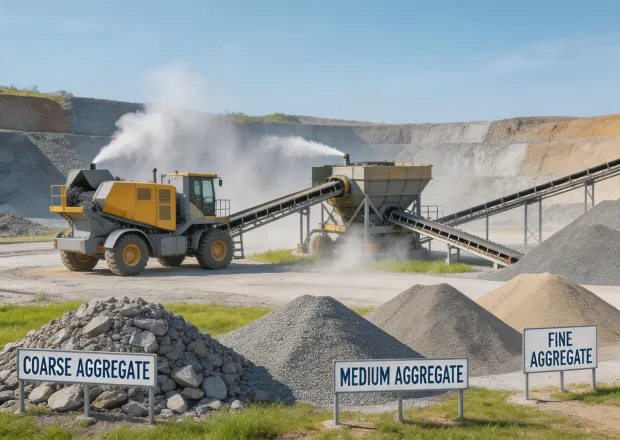
Kleemann treats sustainability as an operating discipline rather than a marketing slogan. A crusher that is poorly matched to feed material can create avoidable recirculation, excess wear, unplanned moves, and additional transport. A clearer specification process can reduce those inefficiencies before the machine reaches site.
The Kleemann review does not promise fixed fuel savings or universal emissions reductions because those depend on material, machine condition, operator practice, and site layout. Instead, the process identifies where waste normally begins: overspecified machines, undersized screens, missing wear parts, long loader travel, unnecessary recirculation, and unclear startup routines. By marking these risk points early, buyers can choose equipment and parts with a more realistic view of operating impact.
Matching jaw, cone, and impact crusher roles can reduce repeated handling and help maintain a cleaner downstream process.
Stocking likely wear items before startup helps avoid emergency freight and idle equipment when predictable replacement points arrive.
Understanding transport width, setup space, and stockpile pattern can limit unnecessary equipment moves on temporary jobs.
Describe the material, feed method, expected runtime, and biggest waste concern. Kleemann will help identify which questions should be answered before equipment is purchased.